
What is Loxone?
Zuletzt aktualisiert: · von Markus Weyel
Loxone is a smart home and building automation system from Austria. A central Miniserver controls lighting, shading, heating, access, audio and energy. Devices are connected by cable (Loxone Tree) or wirelessly (Loxone Air), and the system runs locally without being tied to the cloud.

Loxone: the system for smart homes and building automation
If you are looking into Loxone, you are not looking for individual components but for a system that simply works. Lighting, shading, access or room climate should not be controlled separately but should work together intelligently and regulate themselves in everyday life.
This is exactly what you will find the right Loxone products for here. From the Miniserver as the central control unit to extensions, interfaces and specific solutions for your smart home. This way you can build your system in a structured way, extend it when needed and stay in control of your building automation at all times.
Why a Loxone smart home works as an integrated system
A Loxone smart home does not work through individual commands but through automated processes. Instead of controlling each function separately, all areas interlock and react to everyday situations.
When lighting, shading and room climate influence each other, for example, the result is a system that thinks ahead. The lighting adapts to the time of day, shading reacts to sunlight and the room climate is regulated automatically, without you having to intervene all the time.
The basis for this is central logic that connects all components. Sensors record conditions in the building, the controller processes this information and triggers suitable actions. The result is not a collection of individual devices but a system that works as one.
It is precisely this interaction that makes the difference. The smart home does not just react to input but acts independently and ensures that comfort, energy efficiency and security are automatically coordinated.
What a Loxone system consists of
For this interaction to really work in everyday life, the right components are essential. This is where we come in and provide the right Loxone products for you to build or extend your smart home in a targeted way.
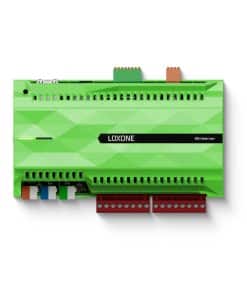
At the centre is the Loxone Miniserver, the central control unit that coordinates all processes. Building on this, you extend your system with suitable extensions and interfaces to add functions or integrate existing technology. Especially with topics such as DALI lighting or more complex control via Modbus, RS485 or DMX, you can see how flexibly the Loxone system is designed.
You will also notice the difference the right components make in everyday life. Intelligent lighting with LED spots, automatic shading with blinds and a well-balanced room climate mean that many processes run in the background. At the same time, you stay in control at all times, whether via push buttons such as the Loxone Touch Pure or via the Loxone app with remote access.
For access and security, you can rely on solutions such as the NFC Code Touch or Door Lock Air, which integrate seamlessly into the system. This is complemented by audio solutions around the Loxone Audioserver, which let you network your home for sound as well.
In addition, you will find all the other components that complete your Loxone smart home with us. These include products for energy and control, motion detectors, alarm sirens and solutions for special applications such as pool control or sauna control. This way you cover all areas of your building automation and build a system that matches your needs exactly.
The advantages of Loxone over other smart home systems
Systems such as Apple Home, Google Home or IKEA Home smart now also offer automations, scenes and schedules. For many applications, that is perfectly sufficient. The difference becomes apparent, however, when you want not just individual commands to be automated but several areas of the house to really work together.
Loxone connects lighting, shading, room climate, access and energy in one central system. As a result, the smart home does not just react to a single trigger but takes several factors into account at the same time. Shading, for example, can be based not just on the time of day but on sunlight and room temperature. It is exactly these connections that turn individual smart functions into an integrated system that works in the background and noticeably makes everyday life easier.
Why we are the right contact for Loxone products
Die Allroundbastler is a Loxone Platinum Partner. Our experience with Loxone goes back to 2015. We founded Die Allroundbastler in 2018 and have been developing and producing our own accessories for Loxone ever since: today more than 1,300 product variants made from 3D-printed parts, aluminium and electronics, manufactured in-house in the Westerwald.
That is why we know which components fit together and what matters in practice. This helps you avoid buying the wrong parts and get to a solution that really works more quickly.
If you are unsure, we will help you choose and show you how to build your system sensibly – in English by e-mail. Our YouTube channel (in German) also offers plenty of content that makes getting started and putting things into practice much easier.
Tree or Air, Loxone or KNX: the differences at a glance
Loxone Tree or Loxone Air?
Tree is Loxone’s wired technology, Air its wireless technology. Both can be combined in the same system, for example Tree in a new build and Air for later extensions.
| Loxone Tree | Loxone Air | |
|---|---|---|
| Connection | Cable | Wireless (868 MHz in Europe) |
| Ideal for | New builds and major renovations | Retrofits and places without cabling |
| Power supply | 24 V via the Tree cable | Mains connection or battery |
| Connection to the Miniserver | Tree Extension: 2 branches, each with up to 50 devices and 500 m of cable | Air Base Extension: up to 128 devices |
| Wiring and range | freely as a line, star or tree | Mesh network: every device with a permanent power supply extends the range |
Loxone or KNX?
Both systems automate the entire building, but they take different approaches.
Loxone is a single-source system: hardware, software and logic are designed to work together. As the central intelligence, the Miniserver bundles all functions, controls them together and displays them directly in the app – without an additional server and without paid licences.
KNX is a fieldbus for which many manufacturers make devices. The intelligence is distributed across the individual sensors and actuators. Cross-system logic, visualisation and automation usually require additional devices or software with their own licences and more planning effort.
One does not rule out the other, though: with the Loxone KNX Extension you can integrate existing KNX components into Loxone. This gives an existing KNX installation a clear visualisation and real automation, centrally in the Miniserver.
| Loxone | KNX | |
|---|---|---|
| Structure | Single-source system | Open standard from many manufacturers |
| Logic | central in the Miniserver | decentralised in the devices |
| Programming | Loxone Config, free of charge | ETS, paid licence |
| Visualisation | Loxone app included | usually an additional system required |
| Connection | Tree (wired) and Air (wireless) | KNX bus cable, plus KNX RF and KNX IP |
| Strength | quick to configure, often cheaper as a complete package | very wide choice of manufacturers |
| In short | integrated, central, easy to implement | open, distributed, cross-manufacturer |
All in all, Loxone brings order, logic and everyday practicality to building automation – even when a KNX installation is already in place.
FAQ
What is Loxone and how does the system work?
Loxone is a complete system for smart homes and building automation from Austria. At its heart is the Loxone Miniserver, a central control unit that connects lighting, shading, room climate, access and audio. Instead of operating individual devices via an app, processes run automatically in the background and the building largely regulates itself.
Which Loxone products do you stock?
In our Loxone shop you will find all the key Loxone products for building a modern smart home. These include the Miniserver, lighting components, control and access control as well as extensions such as Loxone Air or Loxone Tree. This lets you plan your home automation step by step and conveniently buy the right products in our online shop. Our shop also offers a large number of accessories for Loxone that we have developed ourselves and produce in-house.
What is the difference between Loxone Air and Loxone Tree in home automation?
Loxone Air and Loxone Tree are two different technologies within home automation. Loxone Air is wireless and is particularly suitable for flexible retrofits, while Loxone Tree is wired and ensures a stable, structured installation. Both can be combined within the Loxone system, giving you maximum flexibility when building your smart home.
What role does the Miniserver play in building automation with Loxone?
The Miniserver is the heart of the building automation and controls all Loxone products centrally. Processes are defined and linked in the free Loxone Config software. The result is an intelligent system that automatically coordinates lighting, shading and access control and runs your smart home efficiently.
How intelligent is a Loxone smart home compared with conventional lighting and control solutions?
A Loxone smart home combines different functions into one integrated system. Instead of controlling individual devices, lighting, home automation and access control work together and react automatically to different situations. Combining Loxone Air, Loxone Tree and central control results in a solution that can do far more than conventional stand-alone solutions.
What is a smart home? Definition and examples
A smart home is a home in which technical devices such as lighting, heating, blinds or door locks are networked and controlled centrally or automatically. Sensors record conditions such as brightness, temperature or presence, and a central controller derives suitable actions from them. The aim is more comfort, lower energy consumption and greater security.
Which smart home system is best for my home?
The best smart home system depends on what you want to use it for. For individual functions such as smart lamps, wireless solutions from an electronics shop are enough. If you want to automate the whole building, however, you are better off with a professional system such as Loxone, because all trades work together via central logic and the system runs without being tied to the cloud.
What is Matter in the smart home and what role does it play with Loxone?
Matter is a cross-manufacturer standard that lets smart home devices from different brands talk to each other. It is supported by Apple, Google, Amazon and Samsung, among others. Matter is not a wireless standard itself but runs over Wi-Fi, Thread or Ethernet. For building automation, Loxone relies on its own technologies Tree and Air, which work without the cloud. In addition, Loxone Config has offered an experimental Matter integration since 2023, which allows selected functions such as lighting, blinds or room climate to be integrated into Apple Home, Google Home or Alexa.
What are smart home devices? An overview of the key components
Smart home devices are networked components that record conditions in the building or carry out actions. They include sensors for temperature, brightness and presence, actuators for lighting, blinds and heating, and controls such as push buttons and apps. In the Loxone system, all these devices are connected via the Miniserver to form one coordinated overall system.
How does Loxone work in everyday life?
Loxone works via central logic in the Miniserver. Sensors report conditions such as brightness, temperature or presence; the Miniserver processes this information and then controls lighting, shading, heating or audio. The rules are set once in the free Loxone Config software, after which the processes run automatically.
What is the difference between KNX and Loxone?
KNX is an open standard in which components from many manufacturers communicate via a bus and the logic is decentralised in the devices. Loxone is a single-source system in which all the logic runs centrally in the Miniserver. As a result, Loxone is usually quicker to configure and often cheaper as a complete package, while KNX scores with its wide choice of manufacturers.
How much does a Loxone smart home cost?
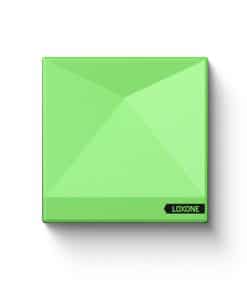
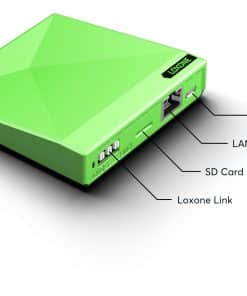
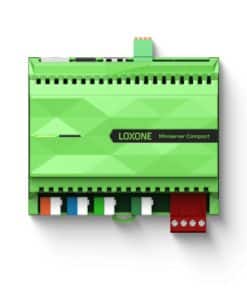
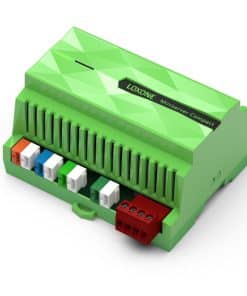
The cost of a Loxone smart home depends on the size of the building and the range of functions. The basis is always a Miniserver as the central unit: the Miniserver Go (Gen. 2) costs 468,41 €, the Miniserver Compact 589,05 € and the Miniserver (Gen. 2) 780,18 € (prices incl. VAT). Extensions, sensors, push buttons and actuators are added depending on the functions you want. A single trade such as lighting can be retrofitted at low cost; fully equipping a detached house is an investment that pays off over the years through energy savings and comfort.
Experience with Loxone since 2015, our own production since 2018


We have been working with Loxone since 2015. Thanks to this experience, we know the entire product portfolio and are convinced by the system as a whole.
We founded Die Allroundbastler in 2018. Since then, we have been developing and producing a wide range of add-ons and accessories for your Loxone smart home in-house.
In our online shop you will find these products together with the complete Loxone range, almost all of it in stock.

Take a look at the Loxone products in our shop
You can find more inspiration on our YouTube channel “Die Allroundbastler” (in German)

5 good reasons for a smart home

50,000 fewer manual tasks per year. According to a calculation by Loxone (in German), this is how many manual tasks an automated home takes off your hands every year. More time for living.

360° solution from alarm to access. Lighting, shading, heating, audio, alarm system and access run in one system instead of many separate apps.

More security, including for your privacy. The system runs locally on the Miniserver without being tied to the cloud; the alarm system and presence simulation are built in.

Save on heating and cooling costs. Rooms are heated as needed, and automatic shading keeps the heat out in summer.

One push button for lighting, shading and music. And of course everything via the app as well, even when you are out and about.

