DIN Rail (Perforated) 1 m
3,12 €
incl. VAT plus shipping
Mounting rail DIN EN 60715
1 m length
35×7.5×1.5 mm
for power distribution systems / switchgear (MZ039/MZ041)
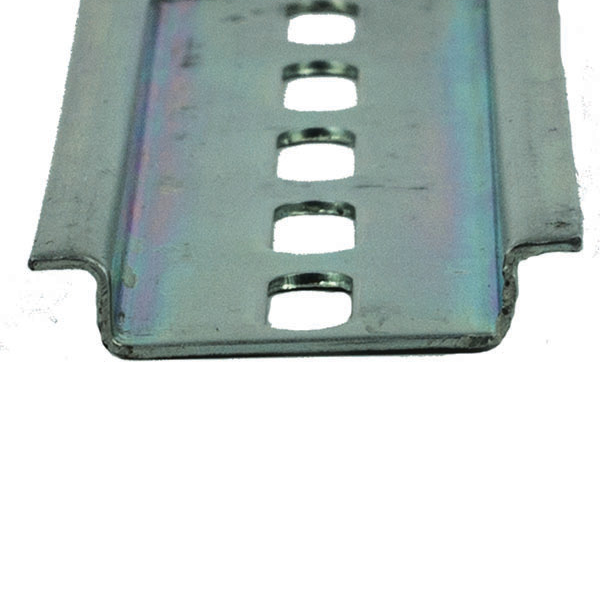
Steel – electrogalvanised, transparent passivated, with slotted holes 5.2×18 mm
Application:
for use in distribution board installation or as a small distribution in the junction box
Delivery time: approx. 1–3 working days / abroad approx. 3–8 working days
| Thickness | 1.5 mm | Design | Mounting rail DIN EN 60715 | Width | 35 mm |
| Height | 7.5 mm | Perforation | yes | Length | 1000 mm |
| Surface | Other | Web height | – mm | Material | Steel |
EGUtec top hat rail, 35×7.5×1.5 mm
for power distribution systems / switchgear (MZ039/MZ041)
Steel – electrogalvanised, transparent passivated, with slotted holes 5.2×18 mm
Application:
for use in distribution board installation or as a small distribution in the junction box
DIN rail (perforated) 1 m – standardised mounting rail for electrical devices
DIN rails, also known as top hat rails or mounting rails, are a central component in electrical installations. They are used to fix devices such as relays, circuit breakers or power supplies securely and in a standardised way in the control cabinet or distribution board.
Thanks to the DIN EN 60715 standard, the dimensions and design of DIN rails are standardised. This means that different electrical components can easily be mounted on the rail and combined with each other.
DIN rails and mounting rails – use in electrical installations
DIN rails and mounting rails are used wherever electrical components need to be installed in a structured and secure way. They form the basis for building distribution boards, control cabinets and small distributions and ensure that individual devices can be fixed reliably.
Typical components such as relays, circuit breakers, power supplies or connectors can be snapped directly onto the DIN rail. The standardised shape results in a high degree of compatibility between different components, so that different devices can easily be combined and integrated into existing systems.
In practice, the DIN rail allows a clear arrangement of the electrical components and supports a well-organised installation within control cabinets or junction boxes.
DIN rails – dimensions, standard and TS35 at a glance
DIN rails are standardised according to DIN EN 60715 and thus provide a uniform basis for electrical installation. The most common design is the so-called TS35 rail with a width of 35 mm and a height of 7.5 mm. This dimension has become the standard and is used in most control cabinets and distribution boards.
Thanks to this standardisation, electrical devices and modules from different manufacturers fit on the same mounting rail. This makes planning and mounting considerably easier, as no individual adjustments are necessary and a high degree of compatibility is ensured.
Material and design
DIN rails are usually made of steel and galvanised to protect them against corrosion and ensure high stability. The galvanised surface ensures that the mounting rail can be used reliably even under different ambient conditions.
Mounting DIN rails
DIN rails are mounted directly in the control cabinet, distribution board or junction box and are designed for fast and secure fixing. Thanks to the integrated slotted holes, the rail can be aligned exactly and adapted to the existing conditions. This makes installation easier, especially when holes or fixing points are not exactly predetermined.
After fixing, electrical devices such as relays, circuit breakers or power supplies can simply be snapped onto the DIN rail. The standardised design ensures that the components sit securely and can be released again if necessary. This keeps the installation flexible, and it can be extended or adapted at any time.
Especially with larger distributions or more complex control cabinets, this type of mounting is an advantage, as individual components can be arranged in a structured way and the overview is maintained.
Designs and versions
Different versions of DIN rails are used depending on the installation situation and requirements. The choice mainly affects mounting and flexibility during installation.
Perforated DIN rails
Perforated DIN rails have predetermined slotted holes and make mounting considerably easier. They are particularly suitable for standardised installations in the control cabinet or distribution board, where fixing should be quick and without additional effort.
Unperforated DIN rails
Unperforated versions offer more flexibility during mounting, as the fixing points can be chosen freely. They are mainly used when individual adjustments are required or special installation situations exist.
TS35 DIN rails as standard
The TS35 DIN rail is the most common design and complies with DIN EN 60715. With a width of 35 mm, it is designed for most electrical devices and modules and is used in almost all distribution boards and control cabinets.
Alternative profile rails
In addition to the classic DIN rail, there are also other profile rails such as C-profiles or special versions for particular requirements. These are used more in special applications, while the TS35 rail is the standard.
What you should look out for when buying DIN rails
To make sure the DIN rail works reliably in your installation, you should pay attention to a few important points:
- Standard and dimensions: Make sure that the DIN rail complies with DIN EN 60715 and has the right size, such as TS35 (35 mm wide).
- Length of the rail: Depending on the area of use, the length should match the planned installation, for example 1 m for larger distribution boards or shorter versions for compact applications.
- Material and surface: Galvanised steel provides stability and protection against corrosion, especially with longer use or demanding environments.
- Design: Depending on requirements, a perforated or unperforated version may be useful, depending on the desired mounting method.
- Compatibility with devices: The DIN rail should match the components used, such as relays, circuit breakers or power supplies, so that they snap on and are fixed securely.
What dimensions and degrees of protection do DIN rail housings have?
The DIN rail is the standardised mounting rail in the distribution board. The most common version is the TS35 with a width of 35 mm and a height of 7.5 or 15 mm. All devices and housings that sit on it follow a uniform grid: their width is given in modules, one module corresponds to 17.5 mm. This makes it possible to plan in advance exactly how much space a row in the control cabinet offers. Our own DIN rail housings, for example for the micro SD card extension of the Loxone Miniserver, are designed for this grid and take up one module. As for the degree of protection, it depends on the place of use: in the distribution board, the protection provided by the distribution board housing is sufficient; outside it, higher IP degrees of protection make sense.
Buy DIN rails – the right mounting rail for your project
This DIN rail gives you a stable and standardised basis for the secure mounting of your electrical devices. Thanks to the DIN EN 60715 design, it fits common components and can be used without adjustments.
If you are looking for a reliable solution for your distribution board or control cabinet, this DIN rail is designed for exactly that. Feel free to contact us if you have further questions – we answer enquiries in English by e-mail.
Frequently asked questions about the DIN rail
What is a DIN rail and what do you need it for?
A DIN rail is a standardised metal mounting rail (DIN EN 60715, 35 mm wide) onto which electrical components are snapped in the control cabinet or distribution box. Circuit breakers, relays, power supplies and also smart home components such as the Loxone Miniserver are simply clicked onto the rail without screws.
What does perforated mean for a DIN rail?
A perforated DIN rail has slotted holes along its entire length. This makes it more flexible to screw down, because the fixing points can be chosen freely, and it is slightly lighter. The perforated version is the most common for distribution board construction because it makes mounting in the cabinet or junction box much easier.
What are the dimensions of a standard DIN rail?
The common standard DIN rail is 35 mm wide and 7.5 mm deep and complies with DIN EN 60715. It is usually made of electrogalvanised steel and cut to the required length. Almost all modular devices and Loxone components are designed for exactly this profile.
{“@context”:”https://schema.org”,”@type”:”FAQPage”,”mainEntity”:[{“@type”:”Question”,”name”:”What is a DIN rail and what do you need it for?”,”acceptedAnswer”:{“@type”:”Answer”,”text”:”A DIN rail is a standardised metal mounting rail (DIN EN 60715, 35 mm wide) onto which electrical components are snapped in the control cabinet or distribution box. Circuit breakers, relays, power supplies and also smart home components such as the Loxone Miniserver are simply clicked onto the rail without screws.”}},{“@type”:”Question”,”name”:”What does perforated mean for a DIN rail?”,”acceptedAnswer”:{“@type”:”Answer”,”text”:”A perforated DIN rail has slotted holes along its entire length. This makes it more flexible to screw down, because the fixing points can be chosen freely, and it is slightly lighter. The perforated version is the most common for distribution board construction because it makes mounting in the cabinet or junction box much easier.”}},{“@type”:”Question”,”name”:”What are the dimensions of a standard DIN rail?”,”acceptedAnswer”:{“@type”:”Answer”,”text”:”The common standard DIN rail is 35 mm wide and 7.5 mm deep and complies with DIN EN 60715. It is usually made of electrogalvanised steel and cut to the required length. Almost all modular devices and Loxone components are designed for exactly this profile.”}}]}
FAQ on the DIN rail (perforated)
Need a mounting rail for a distribution board or junction box? Here are the key answers.
General
What are the dimensions of the DIN rail?
35 × 7.5 mm with 1.5 mm material thickness and 1 m length, standardised according to DIN EN 60715.
What is it made of?
Steel, electrogalvanised and transparent passivated.
How is it fixed?
Via the 5.2 × 18 mm slotted holes.
What is it suitable for?
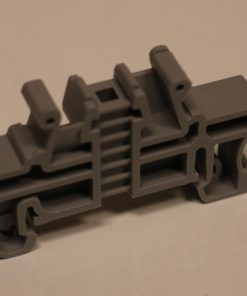
For distribution board installation or as a small distribution in the junction box. For the terminal strip there is the matching PHOENIX Clipfix 35 end clamp.
Shipping
How fast is delivery?
We usually ship items in stock on the day of the order (on Mondays for orders received by approx. 11 a.m., Tuesday to Friday by approx. 2 p.m., German time). Delivery within Germany takes approx. 1–3 working days.
Your question isn’t listed?Write to us – we are happy to help. We answer enquiries in English by e-mail.